

If you think that the easiest way to eat well is to eat out, it’s time to take another look in the cupboard! Start by shopping wisely—lining shelves with versatile carbs and condiments, and the fridge with quick-cooking proteins, fresh fruit, vegetables, and herbs—and you’ll have everything you need to build countless meals. An ingredient that can be savory or sweet, spicy, bold, or comfortingly creamy, Success® boil-in-bag pearl couscous is an essential buy. Wondering how to flavor pearl couscous? It’s as easy as deciding what you crave and going from there!
Delightfully nutty, tender, and chewy, pearl couscous is a type of pasta that is made from semolina wheat. Bigger than traditional, or Moroccan, couscous and slightly smaller than Lebanese couscous, pearl couscous is beloved around the world, popping up in springy salads, hearty stews, warming soups, and sides. Just like regular pasta, pearl couscous can be flavored in many ways. The trick to great flavor is to know how to season it correctly, whether you opt for flavored cooking liquids, delicious garnishes, sauces, or herbs.
An ingredient that offers the versatility of rice or quinoa, with a unique texture and flavor, pearl couscous is a welcome addition to most meals. Learn a few tricks—including the best sauces to pair with pearl couscous, the best way to prepare it, and top recipes to try—and you’ll be reaching for this pantry staple night after night.
Why Pearl Couscous Is Perfect for Bold Flavor
Though often confused for a type of grain, pearl couscous is actually a kind of pasta, just like elbow macaroni, rigatoni, and spaghetti. A neutral ingredient that can be flavored in infinite ways, pearl couscous is ideal when you crave simple meals with bold flavors.
- Unlike other types of pasta, pearl couscous is toasted after it is formed. This gives it a chewier texture and nuttier flavor than regular pasta. It’s these qualities that make pearl couscous so delicious in salads, stews, soups, and more.
- As discussed, pearl couscous is larger than Moroccan couscous. Whatever kind of sauce you add to it—from tangy vinaigrette to moreish gravy—it will absorb its flavors beautifully.
- Though rice is essential for certain dishes (think risotto, sushi, and biryani), pearl couscous adds flavor and texture to plenty of others. Putting Mediterranean salad or North African stew on the menu? Then you’ll want to reach for pearl couscous!
- For taking to work or enjoying at home, Success® boil-in-bag pearl couscous is versatile and quick cooking. It’s also delicious warm or cold, making it a dependable option whether you’re prepping for a potluck or picnic, or simply planning a week of desk lunches and dinners.
The Best Ways to Flavor Pearl Couscous Before Sauce
Though you can cook pearl couscous simply, then stir it together with a flavorful, well-balanced sauce, you can also flavor couscous as it cooks. Learn how to cook pearl couscous that’s loaded with flavor by following these tips.
Toast the Pearl Couscous
Many cooks like to toast their pearl couscous in a little oil or butter before it is boiled. This adds deeper flavor to the couscous and improves its texture. To toast couscous, simply heat 1-2 tablespoons of olive oil or butter in a saucepan over medium-high heat. Add the dry couscous and stir for 1-2 minutes, until it smells toasty and is beginning to brown. Add boiling water or cooking liquid and proceed with your recipe.
Cook It in Broth Instead of Water
As with rice and quinoa, one of the easiest ways to add flavor to pearl couscous is to replace the cooking water with an equal amount of broth, juice, coconut milk, etc. Replacing the cooking water with a liquid that adds sweet or savory notes will result in pearl couscous that is infused with flavor from within.

Add Garlic, Shallots, or Onion
Before boiling pearl couscous, you can also flavor it with sautéed garlic, shallots, or onions. These aromatics are essential building blocks to a deeply flavored dish. Simply sauté one or all in a saucepan in 1-2 tablespoons of olive oil or butter. Then, add the pearl couscous and stir to coat. Then, proceed to boil the couscous.
Salt the Cooking Liquid Properly
Using bland cooking liquid is a guaranteed way to end up with bland pearl couscous! Instead, make sure to add enough salt to the water you’re using to cook your pearl couscous. We recommend 1/2 teaspoon of salt for every 1 1/2 cups of water. As mentioned, you can also use broth instead of water.
Finish with Lemon or Vinegar
Once pearl couscous is cooked, you can brighten it up with a squirt of lemon or a drizzle of vinegar. Red wine vinegar, balsamic, and Champagne vinegar all work well. Especially good for salads, this extra step helps guard against underseasoned couscous.
Use Fresh Herbs
Adding fresh herbs is an easy and effective way to flavor any dish, including pearl couscous. Choose herbs that match the dish you’re making—think basil, cilantro, dill, mint, or parsley— and toss them in while the couscous is still slightly warm. The heat will help bring out their flavor. Dried herbs, such as thyme and oregano, should be added sparingly during cooking.
Toss While Warm for Best Flavor Absorption
Though some ingredients, such as cucumber and certain types of cheese, should be tossed with pearl couscous once it has cooled, others can be added while it is still warm. In addition to fresh herbs, you can add dried fruits, lemon zest, vinaigrette, and sauces to warm pearl couscous to encourage the flavors to meld.
7 Bold Sauces That Love Pearl Couscous
Once you feel comfortable with pearl couscous, you’ll want it to star in every meal! Beyond countless pearl couscous recipes to try, you’ll want to learn which sauces are a perfect match for this indispensable ingredient.
Creamy French Onion Sauce
Rich, silky, and savory, French onion sauce is also known as soubise. A classic that marries caramelized onions with velvety bechamel or heavy cream, it’s commonly paired with roasted proteins and vegetables. Try it in our decadent Creamy French Onion Pearl Couscous recipe, a twist on the beloved soup that you can serve as a first course, side, or main dish.
Sesame Ginger Sauce
Delightfully bouncy and chewy, pearl couscous can be used in place of rice for a fun twist on your go-to stir-fry. Mixed with sesame ginger sauce, it becomes zesty, sweet, and savory, and can be paired with veggies or sautéed proteins. In our Sesame Asian Couscous Stir-Fry, a delectable sauce transforms pearl couscous, a rainbow of crunchy vegetables, tender shrimp, and egg into a winning weeknight meal.
Lemon Butter Sauce
Citrusy, bright, and seductively silky, lemon butter sauce is another French classic that instantly elevates any meal. In our Simple Lemon Butter Pearl Couscous, we cook the star ingredient with lemon, then combine it with melted butter, zest, shallots, and herbs for a side dish that’s bold, elegant, and delicious alongside any main.
Basil Pesto Sauce
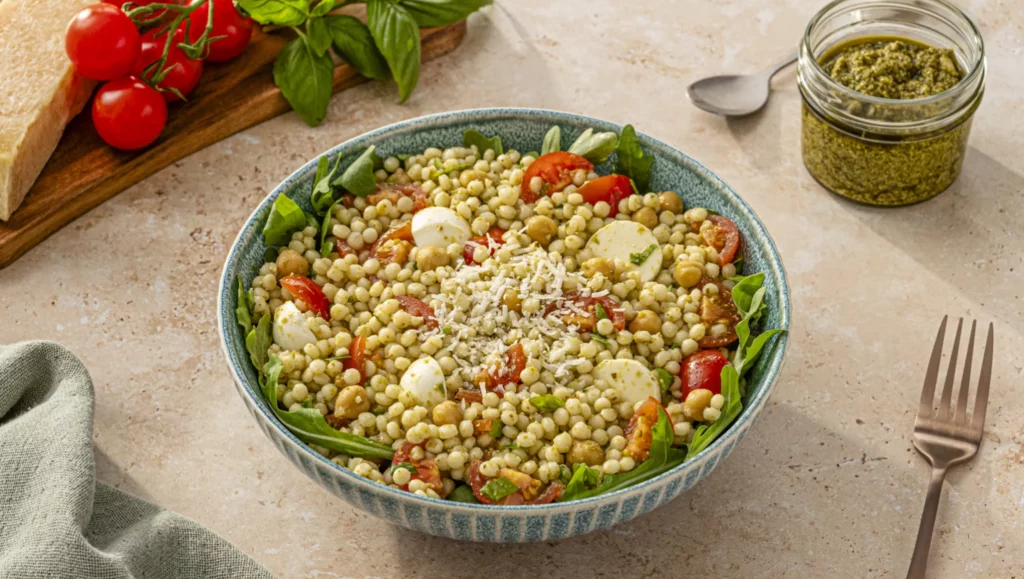
A sauce that screams of summer, basil pesto is an herby, aromatic blend of fresh basil, good olive oil, garlic, pine nuts, and parmesan cheese. Traditionally used on pasta, pizza, fish, and more, it’s a smart choice for warm-weather dishes, like this satisfying Pesto Pearl Couscous Salad.
Maple Dijon Vinaigrette
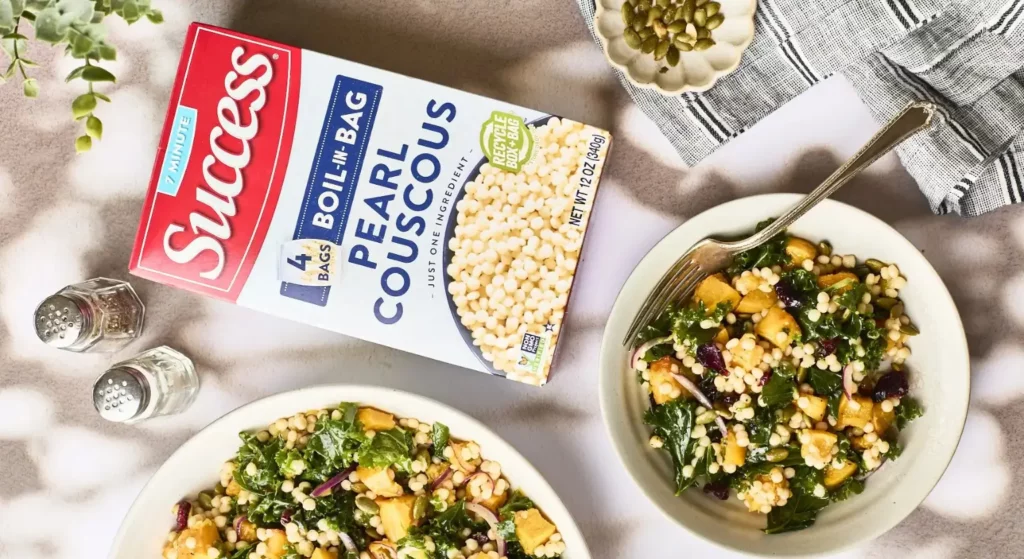
The best salads boast a variety of textures and flavors, including sweet, tangy, and savory notes. It’s no wonder, then, that the nuttiness of maple syrup combined with pungent Dijon mustard, olive oil, and vinegar is a perennial favorite! With its tempting array of flavors and colors, this Roasted Pumpkin Pearl Couscous Salad with Maple Vinaigrette is an ideal spot to try it.
Cacio e Pepe Sauce
Derived from the classic Italian dish, cacio e pepe sauce is a luxe blend of Pecorino Romano, pasta water, and freshly-cracked black pepper—that’s it! When trying it in this Cacio e Pepe Pearl Couscous, be sure to save some of the pasta water to thin out the sauce, if needed.

Green Goddess Dressing
However you like to make your green goddess dressing, it should be vibrant, punchy, tangy, and irresistible! In our Green Goddess Pearl Couscous Salad, we rely on spinach and parsley for flavor and a lovely shade of green, plus Greek yogurt, for heft, and lemon juice to tie everything together. For a more savory sauce, add garlic and anchovies to the blender in Step 2.
